
Design at Attio
A behind the scenes look into the product design team with André Gonçalves.

Dear Readers,
I am excited to bring you a “behind the scenes” look into the product design team at Attio with André Gonçalves. I’ve worked with Attio since 2023 and have been an early user of the product.
I’ve always been insanely impressed with the emphasis they put on design since the very start, the high standards that ripple through the company from hiring, culture, through to tiny details on the product.
If you don’t know about Attio, they are building the AI CRM for the next era of companies. They are building a platform that gives teams real clarity by connecting all their messy, unstructured data into a coherent, actionable system.
They are breaking down old assumptions of what CRM should be and showing what it can be when it truly adapts to how modern teams work. As focused as they are on the product, they’re equally intentional about the team. They grow thoughtfully by bringing in people who share a deep desire to build something exceptional.
Here’s just a small number of takeaways I took from this article:
1. “If the output is strong, tell me about your process. If it’s not, the process doesn’t matter.” Andre speaks really clearly about how your output is the proof. Process is only interesting once you’ve earned the right to explain it.
2. AI didn’t make design systems less important; it made semantic rigour non-negotiable. The interesting move here isn’t “we use AI.” It’s that a mature, well-structured design system becomes a richer context you can hand to a model.
3. Product and brand are two sides of the same coin. They come from the same place, and neither is trying to be something the other isn't.
Let’s dig into the design team at Attio after an introduction from Andre:
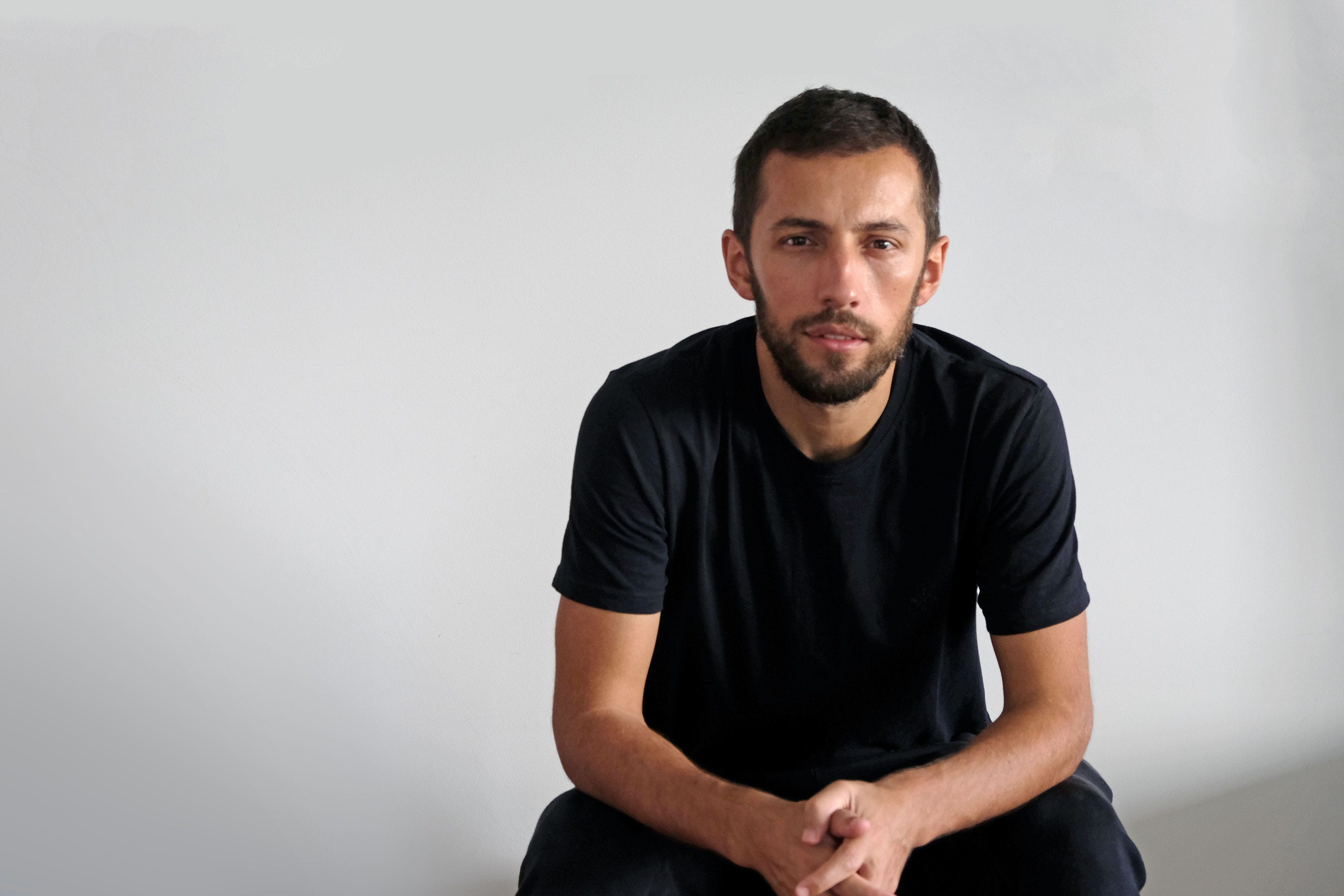
André leads design at Attio. Before that, he was a founding designer at Alguna, a YC-backed monetisation platform, and at Sketch, where he helped shape the prototyping experience. He started out working in agencies — The Studio, Fueled, and others — spanning brand, product, and everything in between, and it was that breadth that made him want to stick with product for the long run. He and his brother also built Sip, a color picker for macOS that got a bit more attention than they expected, a small side project that’s quietly been running for more than a decade.
1. How is the Design team structured at Attio?
It’s small and pretty flat. We have Product Design and Creative Studio as distinct areas, but in practice, we’re constantly in each other’s work. Things rarely start with a handoff. Designers are in from the beginning and stay close to decisions as they happen.
There aren’t many layers between thinking and building, and that’s intentional. A big part of the role is helping figure out what actually matters and keeping things moving while the work is still forming. We’re remote-first, but we’re closely connected. When something isn’t working, we fix it. We don’t add structure around it.
How do both teams collaborate?
It happens at both a craft and a strategic level. At the surface, we stay aligned on things like typography, illustration, iconography, and tone, so product and brand feel connected rather than like two separate things. At a deeper level, we take a product-led approach. The product is part of the brand, and we want to represent it honestly rather than idealise it.
The collaboration goes both ways. Creative Studio might step in when something more expressive shows up in the UI. Product Design gets involved when real interface elements become brand assets. We have a weekly meeting with both teams, and I have regular check-ins with Dario, our Studio’s Creative Director, not just on the work, but often on broader direction and hiring. We tend to share a clear view of the kind of people we want to bring in.
2. How does Attio measure design success?
The clearest signal of design success is whether people actually use what we ship and whether it feels like the natural next step for Attio. When something lands right, it feels inevitable. Like it couldn’t have been done any other way.
In practice, that shows up in how things work around the feature: fewer workarounds, clearer decisions, less friction. When adoption is natural and things simply work better, that’s usually success.
We look at adoption and activation. But how much weight they carry depends on what we’re building. For more defined parts of the experience, those signals are really useful. And honestly, it’s just nice to see people using the product.
But when we’re making bigger bets, building something new that people don’t even know they need yet, the data becomes more of a signal than a guide. You can’t rely on it in the same way. A lot of it comes down to instinct.
Nick (our CEO) is a product designer at heart, and has a deep understanding of Attio from building it, plus a real knowledge of the business side. So when we’re looking at whether design is working, across the product, the process, the people, he brings that product and company perspective, and I bring more of the craft side. Together, we get a more honest view of whether something is actually working.
3. How does Attio interview Designers?
TL;DR of the process:
Conversation with me
Design Crit with wider team
Wider team interview with Nick and others
It starts with a straightforward conversation. We want to understand how someone thinks about design and whether we’d work well together. No performance, just an honest sense of fit. Really, it’s about understanding if they have a builder mindset and the agency that comes with it. I look for people who have this natural drive to solve things, because they want to, not because they have to. Also, someone who can stay excited but still be thoughtful about what we do. And then, of course, it’s about fit. Building a team is hard, and we don’t want to break something that’s working well.
For the design critique, we ask them to bring a project they fully own. The work and the craft absolutely matter, but the session quickly becomes about something more. How do they think with something tangible in front of us? It gives shape to the conversation in a way an intro call can’t. You start to see what they consider good or bad, simple or complex, and why. The project becomes a way to understand how they reason and how they’d fit here.
After that, we involve key people on the team, often including Nick, to make sure there’s shared conviction. The whole thing is open and direct. We’re looking for real alignment on how we think and build, and the critique is usually where that becomes clear.
We’re not against design tasks. We’d offer one if a candidate preferred. But most of the time we’re talking to designers with strong portfolios and real experience, so we focus on their past work. A real project they owned, with real constraints, real collaboration, real iteration, gives us a more grounded look at how they actually think and work.
The biggest miss isn’t weak work. It’s treating the session like it’s about proving the work is good. I’d much rather someone show something flawed and talk honestly about it than present something average and try to frame it as great. What matters is the honesty around what we’re looking at because that’s what my day-to-day collaboration with them would actually be like.
Another trap is over-indexing on tools and process. Those matter, but only if they serve a strong outcome. If the output is strong, tell me about your process. If it’s not, the process doesn’t really matter. The session is about understanding how we’d work together on hard problems, not which stack someone used to get there.
The most common reason we pass on a candidate who looks great on paper is when someone positions themselves as a leader, because we need people who build. Pedigree (big names, lots of companies on a CV) can look impressive, but what matters most to us is the impact someone had and how they grew within a company. Because that’s what we expect people to do at Attio.
We’re also not looking for people who position themselves as traditional leaders or directors. We want people who stay close to the work and care about every part of the process. That’s how we build here.
How long does the whole process take, start to finish?
We try to keep the hiring process short, but we’re intentional, so it takes a bit of time. Usually, two or three interviews plus the design critique. From the first conversation to expressing formal interest, it’s typically around three weeks. Logistics and scheduling can stretch it, but that’s the rough shape.
4. Who thrives at Attio?
People who are builders at heart and adaptable by nature They’ve built a lot and want to keep building, and are excited to rethink how we build next. They’re curious not just about improving design, but about working in new contexts we haven’t encountered yet. We look for people who are comfortable building into uncertainty.
Low ego and high ownership tend to do best here. Dependable, hands-on, and curious beyond design itself. If someone prefers a rigid process or is driven mainly by trends, this is probably not the right environment.
Why would a designer want to join Attio?
Attio is the fastest-growing CRM in the market. That matters because it means we proved something. That you could take a modern stab at a category that felt settled for decades.
What’s also rare is what you’re designing on. The data model underneath Attio is genuinely exceptional, which gives designers an unusual amount of malleability. You’re not working around legacy constraints. You’re building on something made right. And then there’s Nick. Startups are shaped by the founder’s vision, and his design vision that is rare at that level. That changes the entire environment you work in.
If you want to stay close to the craft and build on something genuinely AI-native, this is one of the few places where all of that is true at once.
How would you describe the design team’s shared values?
I feel our design team shares a set of principles, even if we’ve never sat down and written them out. And I think you can feel it in the product too.
They are:
Restraint. Nothing is asking for your attention. The best version always has less in it than the one before.
Honesty. It is what it is, no more, no less. You can always feel when something is performing or simply aspiring to be something it can’t.
Inevitability. It couldn’t have been done any other way. Nothing is missing, nothing is forced, nothing is accidental.
Charm. When something stops trying to please and starts being itself. That’s where you feel a person made this not to seduce but to be true. This is rare.
5. How is the Attio design team using AI?
We’re figuring it out like everyone else. AI now touches the entire product design process. A lot has changed, some things haven’t. But it’s safe to say there isn’t a stage where we don’t at least consider it. We use it to generate ideas, stress test assumptions, and think out loud early on. Further in, it helps organise and document decisions. Tools like Granola have become a natural part of how we capture and share context. We all use Cursor a lot for coding and quick prototypes, probably because it feels close to what VS Code already was for many of us.
We still use Figma a lot. So much of what we do is collaborating, discussing ideas, understanding holistic patterns, and stepping back to check we’re heading in the right direction before going too deep. Figma happens to be where that’s most efficient, at least for now.
What’s also worth saying is that a product like Attio, where the design system is fairly mature, changes how you use AI. The context you can give an LLM is richer, and when and why you reach for it looks very different from a company going from zero to one.
Beyond the day-to-day usefulness, though, there’s a deeper relationship with AI that we genuinely feel. Not just as something that makes us faster, but as a genuinely new medium with its own nature. Photography didn’t try to be faster than painting. It became its own thing entirely. That’s the most exciting part about where this is all going.
What AI tools does the design team use daily?
It really varies. Cursor for coding and quick prototypes when you need to get something tangible fast. Granola for recording meetings and capturing decisions so nothing gets lost. ChatGPT and Perplexity for problem-solving and research, especially early on when you’re trying to get your head around something. Midjourney and Magnific for visual exploration, that’s more on the Creative Studio side. Claude for coding workflows. People gravitate toward whatever fits the problem, and a lot of these tools also get used outside of direct work, for side projects or personal exploration.
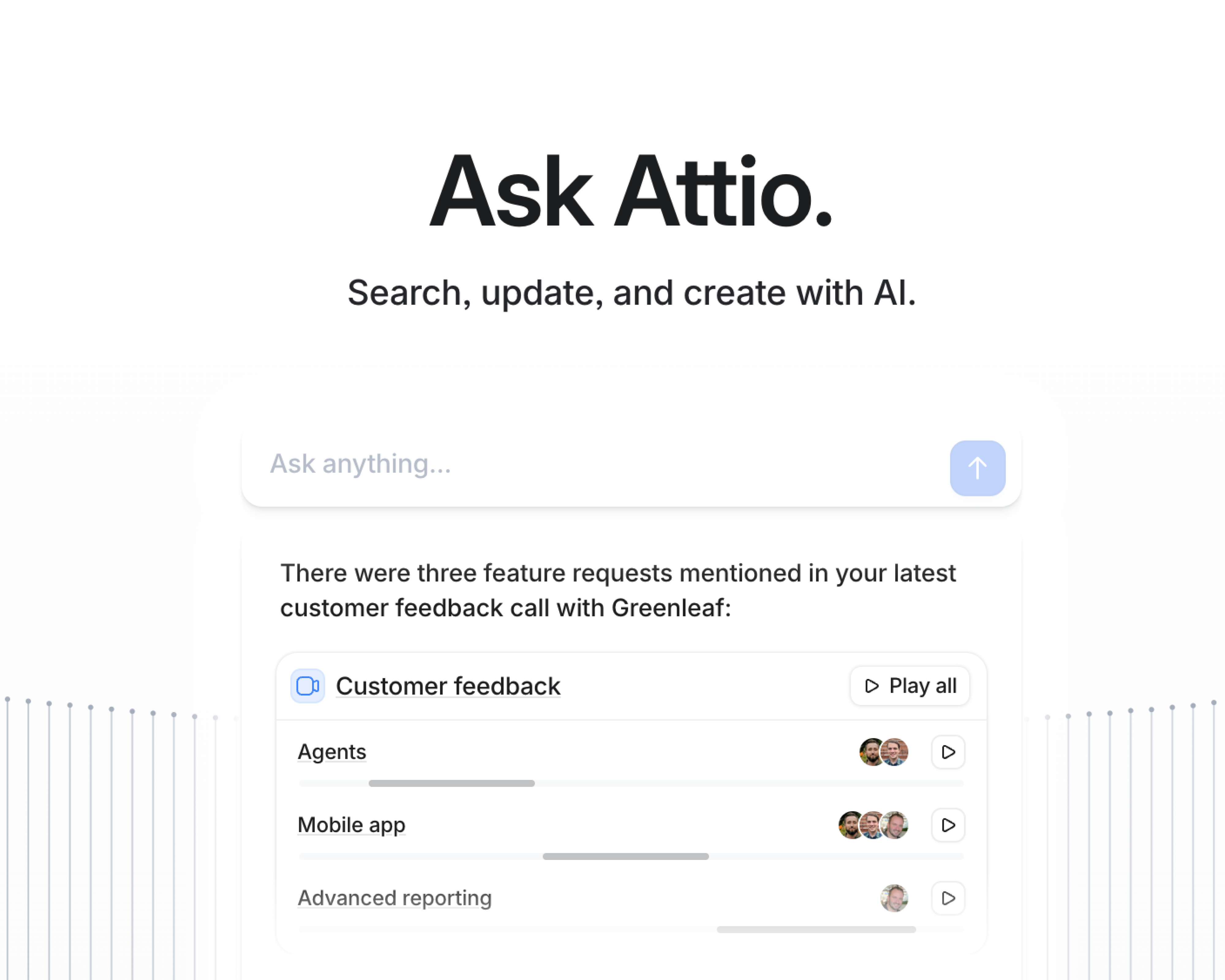
We recently shipped “Ask Attio”, our conversational AI layer that can reason over and act on all your GTM data inside your CRM A lot of us were involved, but Filipe led most of the work. The hardest part was that the possibilities kept shifting. Because AI was core to it, we worked directly with real prototypes early on to understand what the model would actually return. Something that wasn’t possible a few months earlier suddenly was. Designing while the ground was moving is hard, but also exciting.
At the same time, it was important that this didn’t feel like a shiny new surface for the sake of it. We wanted it to feel unmistakably Attio. Something familiar, where people would feel at home (pun intended).
It’s still very new, but it already is the new normal for using the product. It’s genuinely magical.
6. What is Attio stance on design systems and AI?
AI reinforces the importance of having a strong system. The more meaningful and well-structured our systems are, the better they work with AI. That means clear, semantic naming and thoughtful structure so both humans and AI can understand and use them effectively.
AI doesn’t just help us build faster; it raises the bar for building coherently. It pushes us to create systems that are clearer, more adaptable, and able to evolve alongside it.
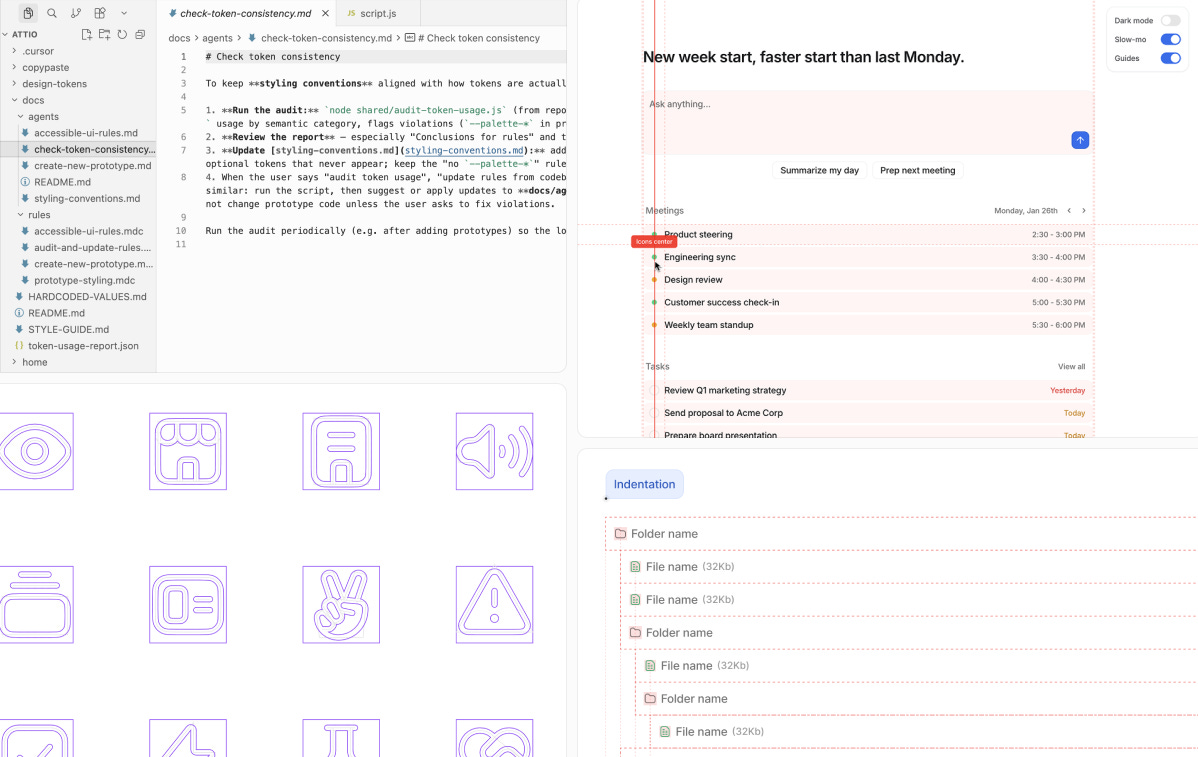
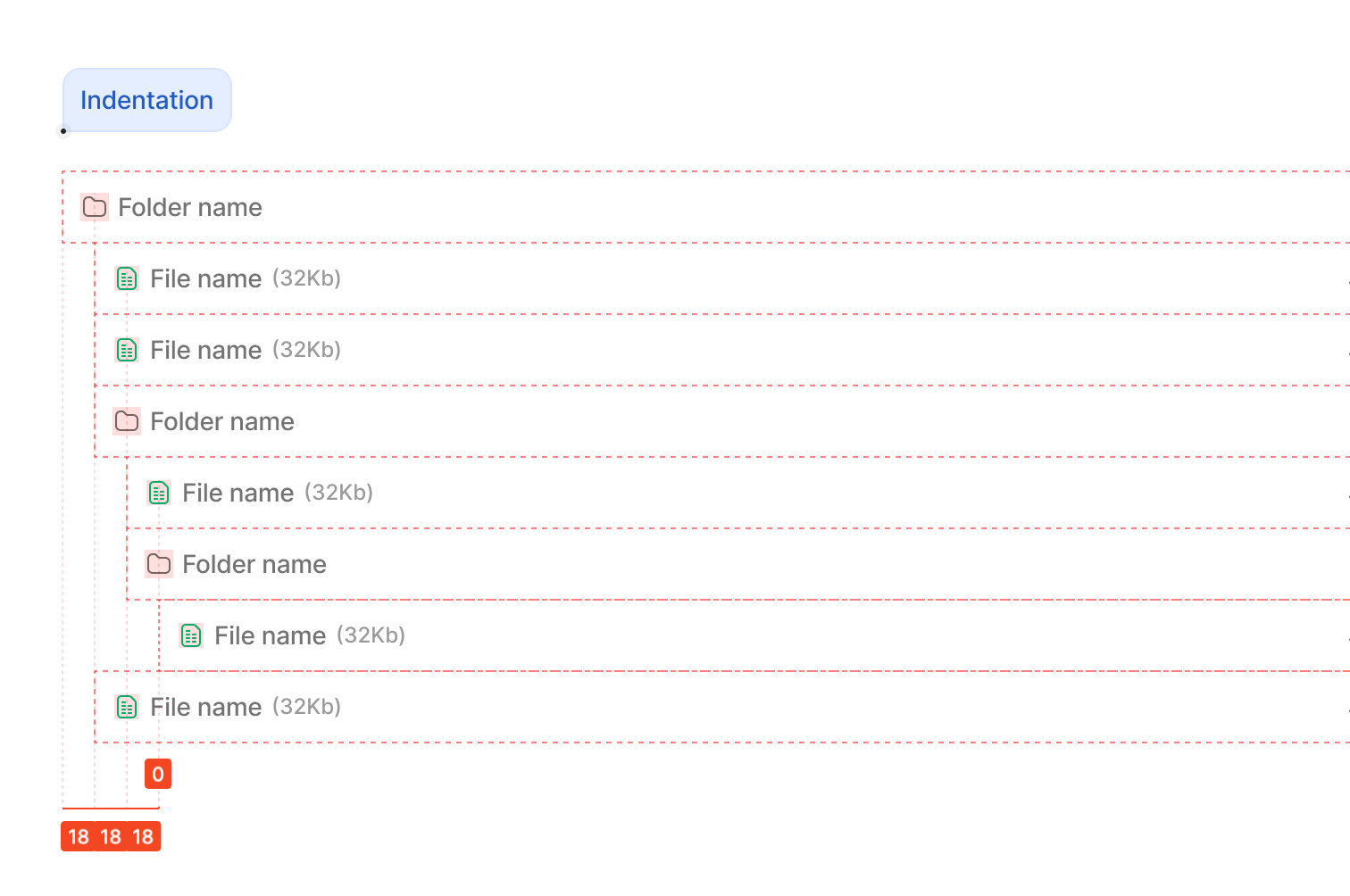
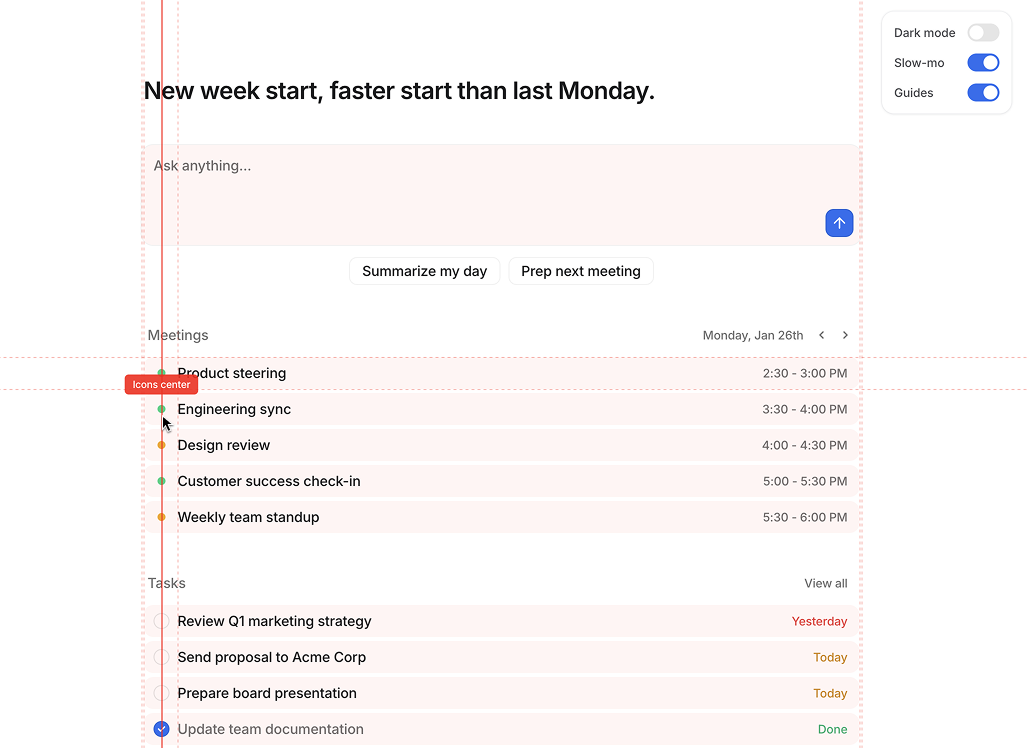
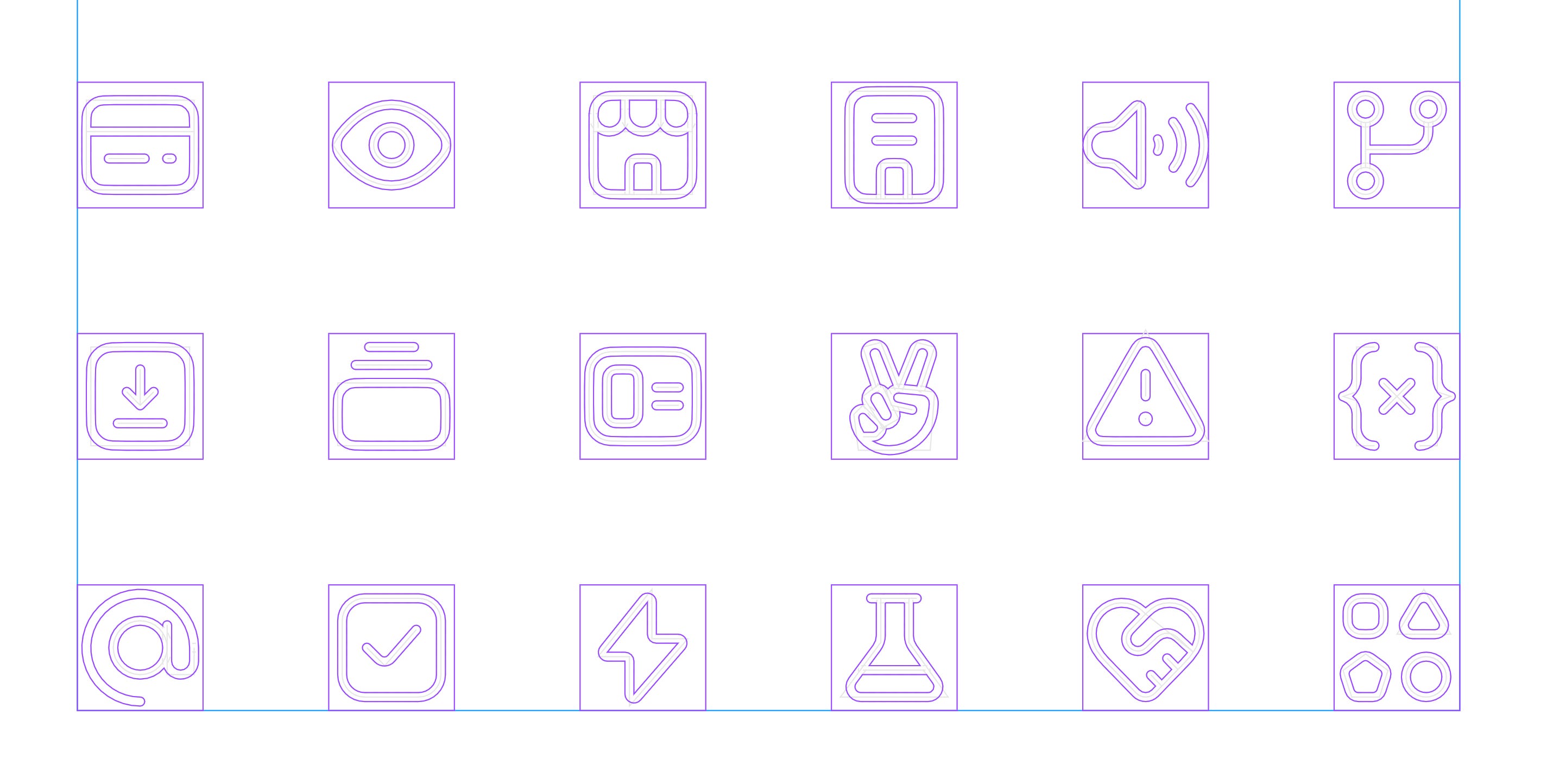
We have a small cross-functional group, where I, Sanya (PM), and Kasper (Engineering) think about how the system evolves over time. The goal isn’t to manage or maintain it as a separate function. We don’t have a traditional design system manager.
Everyone working on the product contributes to it. That group exists more to think about the environment we design within, how it should work now and how it needs to evolve in the future rather than to own it outright.
AI has pushed us to double down on semantics and consistency. Design systems are more than guardrails. They help elevate the floor and shape how we work, talk about, and build. It’s product that builds the product.
They influence ways of working as much as interfaces. We used to express this mainly through structures meant for humans. Now we’re thinking about them as something that can also guide models and agents, extending the same system into how we collaborate with AI.
7. How will you maintain high standards?
We grow the team deliberately. We treat hiring as a long-term decision, not a response to short-term pressure. When something is not working, we fix the cause directly. The team grows when the work genuinely expands.
Staying lean helps. When teams are small and close to the work, ownership is clear, and standards are easier to maintain. And when we do hire, we do it intentionally. We hire people who make the team better, not just bigger. That’s how the bar holds over time.
We’ve just hired two product designers and are planning to bring in two more by the end of the year. We’re hiring because there’s a lot we want to build. Attio is moving fast, and the scope of what we’re working on keeps expanding.
What’s the review process for design work before something gets shipped?
It’s hard to say when the review starts, because we’re almost always in that mode. We build, test, and polish continuously. PRs get shared in Slack, and designers are expected to jump in, test things in the product, and talk directly with engineers when needed.
There’s a lot of QA, it doesn’t stop at launch, and nothing is too small. We also run team-wide QA sessions where everyone gets on a call and tests the product together.
Has there been a time where pressures of growth almost compromised quality?
Growth pressure tends to sharpen our sense of quality rather than dilute it.
We operate within business realities; there are goals, launches, and timelines. Sometimes we set deadlines because that’s also how different teams coordinate. But I can’t recall a time when we knowingly compromised quality just to ship something faster.
We don’t really look at the product through the lens of “are we rushing this?” If something isn’t ready, it’s usually clear in the work itself. Deadlines help with coordination, but they don’t tend to override judgment.
8. What work are you most proud of from the design team in the last 12 months?
Shipping new features is great, and we’ve done a bunch of exciting things with Ask Attio, the SDK, and more to come.
But what really inspires me is when you take something that’s already good and double down to make it great, and we’ve done exactly that this last year. We haven’t let the experience slip. We’ve focused on consistency, polish, and tightening the gap between the idea and the actual execution.
The team is more product-native now, closer to the real thing, more detail-oriented, and more aligned in how we talk and build. This growing mentality that the product is the thing you design.
I’m proud of that.
Thanks to André for this great run-through of design at Attio. If you want to do some of the best work of your career, Attio is hiring a Lead Product Designer and a Visual Designer for the Creative Studio.
You can see both JDs here: