

It’s an exciting time to be in design. There’s never been more opportunity. The playing field has been levelled, and companies and teams are reimagining the impact they can have.
Hiring designers is changing. We have more “Super IC” roles, design teams are flatlining, there’s a default expectation to be hands-on, AI fluency is a sought-after skill (and will continue to be), and, as we’ve all heard and seen, there’s a huge emphasis on craft.
TL;DR
AI fluency is no longer a “nice to have”
The need to hire based on potential
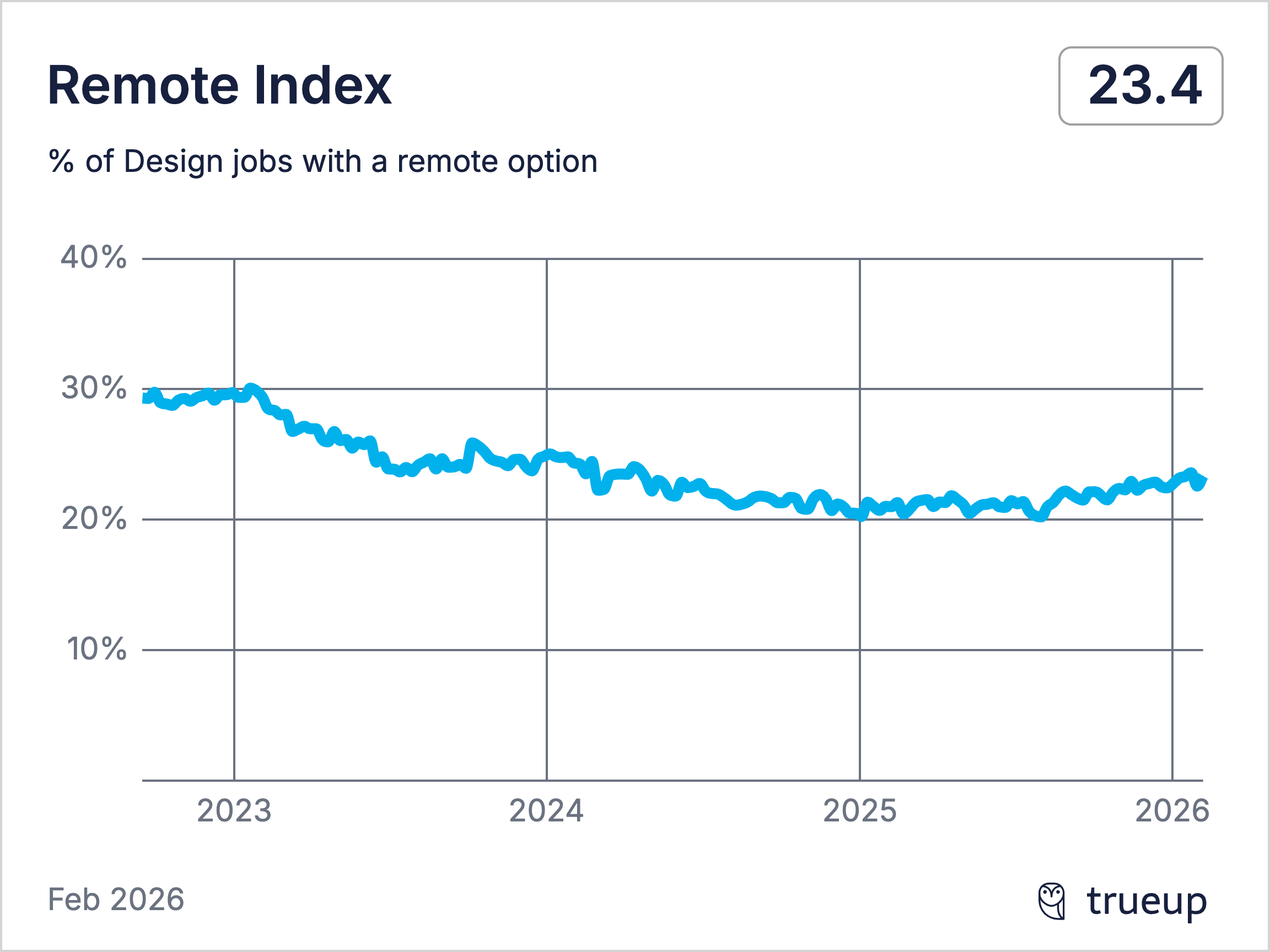
Steady increase in remote roles
SF is dominating
Output over everything
Brand and visual design demand is accelerating.
Divide of Designers
I used TrueUp for the data. It’s an incredible resource that you should check out.
AI fluency is no longer a “nice-to-have.”
A lot of companies are pushing designers to own the frontend, where they have dev environments, ship to production, prompt etc. To do that, you need to understand how AI is shaping ways of working and how you build products. How they work is changing, with tighter, faster feedback loops. They want to hire builders.
Design leaders can’t hide behind playbooks; you must have driving product impact. You must be curious about implementing new tools and setting an incredibly high bar for craft, taste, and more.
There are more eyes on design in companies than ever. The outsized impact designers can have now is wild.

Hiring based on potential more than ever
Companies building AI-native products need designers who can think about agent behaviour, systems and workflows that aren’t purely UI-driven. It’s a genuinely new design discipline for many, so if companies only try to hire people with this exact experience, they will struggle to hire.
Also, some design teams are so far ahead, prototyping with newer AI tools and, in general, ways of working, that it’s difficult to find designers who have done this and meet every requirement.
Slight increase in remote roles
I was surprised to see it not declining in the data.
There are a lot of companies hiring designers, which reminds me of 2021, but this time it's different; companies will wait to find the right person. Finding specific designers is difficult, so companies seem genuinely more flexible to hire the right person remotely if needed. I believe companies are starting to understand how truly few great designers there are to meet their requirements, so they can't impose a hard office requirement. If they do, compromise.
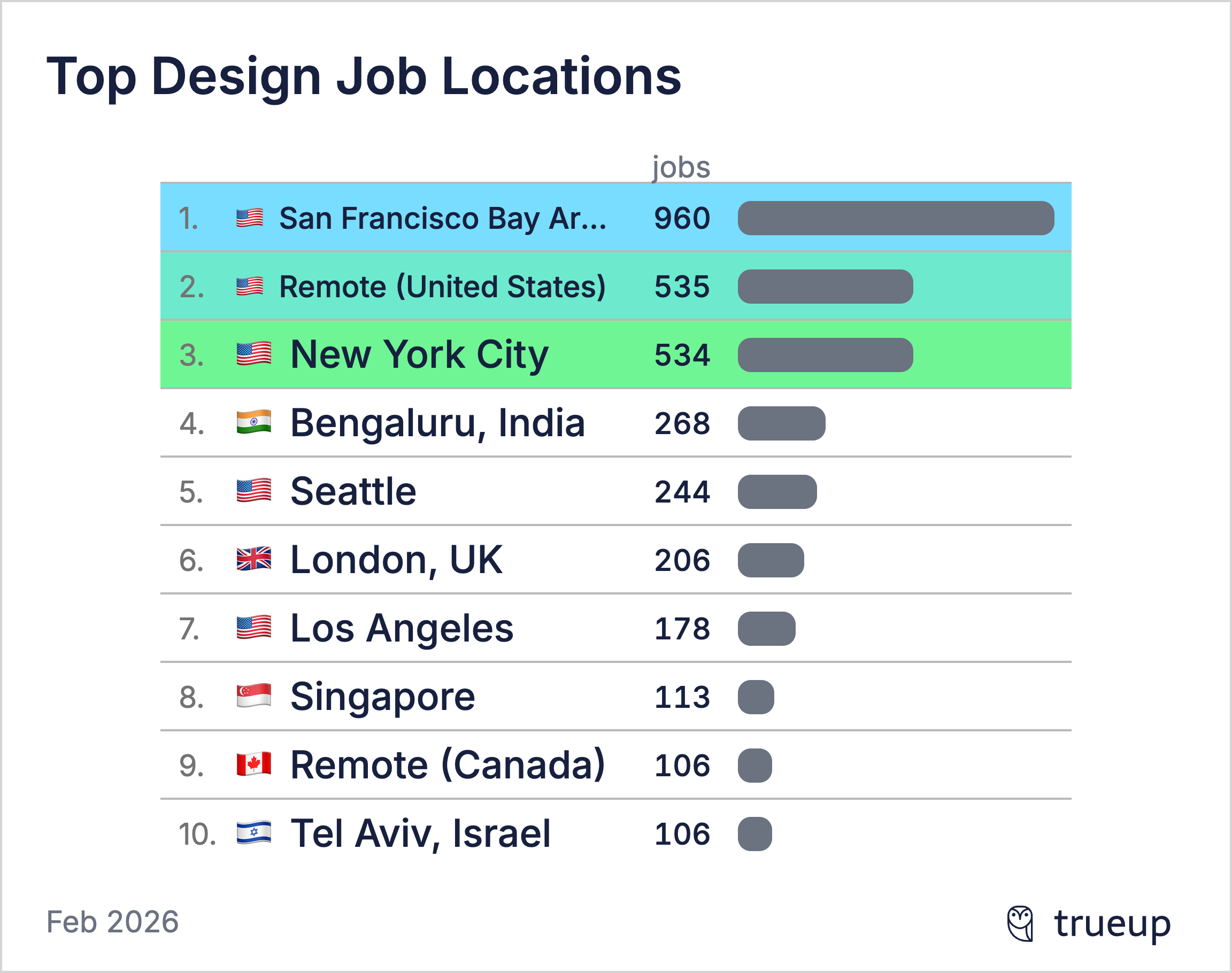
SF is dominating
This has not changed since my “state of hiring” post last year. The US, and in particular SF, seems to be where the bulk of great roles are. It’s interesting to see so few European cities on this list.
Hiring in Europe for top-tier AI native designers, this is why we need to hire here on potential and mindset.
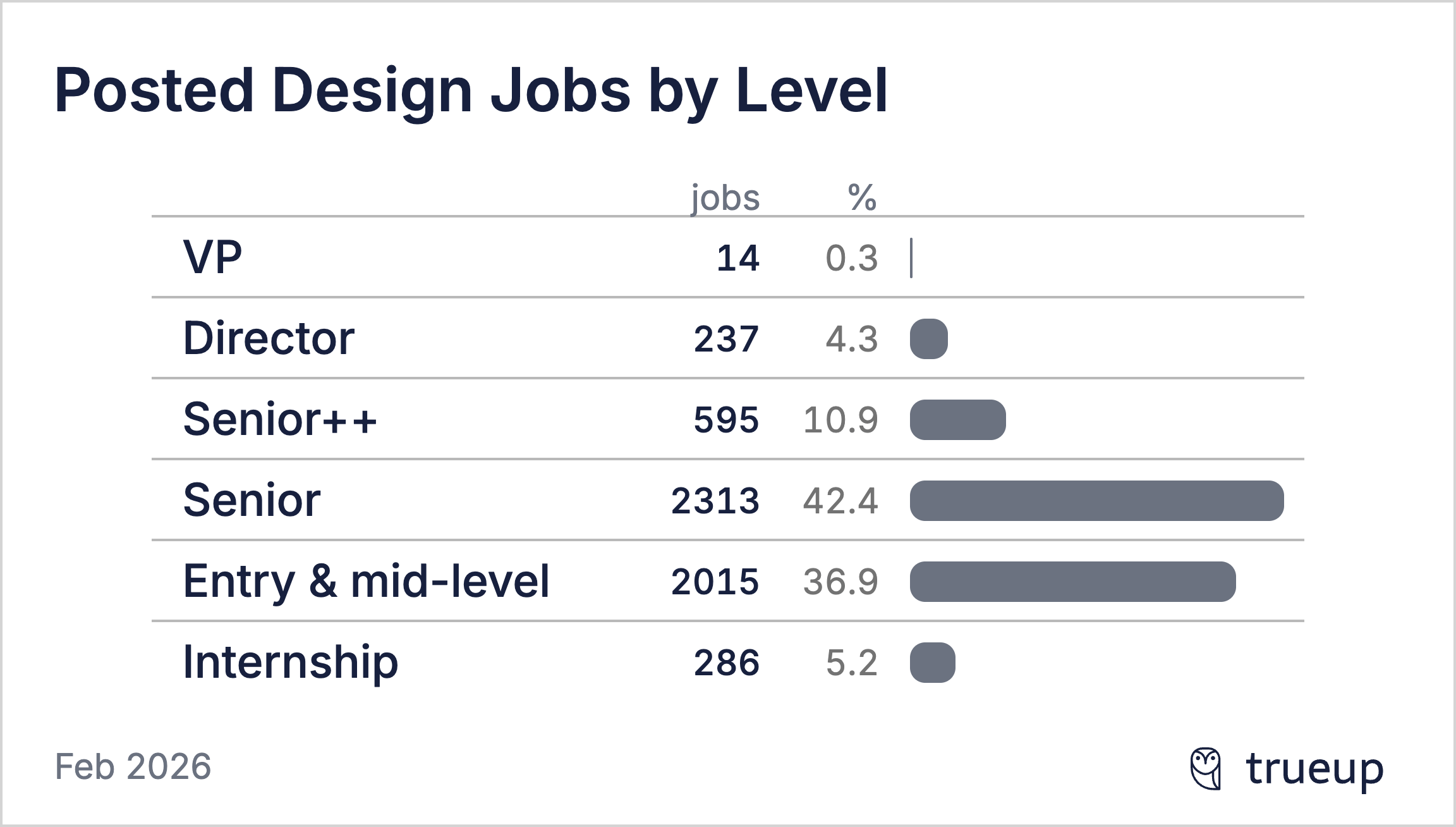
IC and output over everything
Companies want “do-ers”. 99% of people are now judged by the impact they have on the product they work on, not just pure people management.
They want to hire designers and leaders who love doing IC work; they are hands-on by default, true builders at heart. They use AI tools regularly, constantly exploring what's new, genuinely energised by emerging ideas rather than threatened by them. They see AI as transformational, not tactical, and they never underestimate what it's capable of, always upskilling to stay relevant. They move forward through live tests and prototypes, not by leaning on old playbooks that worked in the pre-AI era. And they thrive in ambiguity — because right now, there's a lot of it.
Brand and visual design demand is accelerating.
In a world where AI generates UI/Visuals so quickly, companies seem to focus on hiring brand designers who can bring identity and an edge to the brand, helping it stand out. So many companies now look the same. I’ve spoken to companies of all sizes, from a 2-person start-up to corporate companies investing in brand.
Divide of Designers
You have designers who are in demand, such as the product designers with a portfolio of shipping highly polished products.
People with a very focused UX background, without a portfolio of well-crafted visual products, will and do struggle to get through the portfolio review for IC roles. You need to lean on other areas to stand out. Not saying this is right, but it's just what I am observing.
To conclude, the one thing that stands out from many conversations with companies and designers is the need to hire based on potential, as it is so important; otherwise, if you’re waiting to find someone who has done exactly what you’re doing, you will be waiting a long time.
We’re all figuring out how our work is changing.
Best takes on the market I’ve seen Tom. 👏✨🐇